


LCCI Leads the Transition to Digital ATA Carnets
On Monday 1 June 2026, London Chamber of Commerce and Industry (LCCI) began the transition from paper to digital ATA Carnets for holders travelling to the EU, Norway and Switzerland. This marks a significant shift in how temporary exports are processed, with a clear focus on improving efficiency and preparing businesses for a fully digital future (expected early 2028 full adoption of digital for all Carnet Countries).
Ahead of the launch, LCCI delivered a structured and versatile programme of support to ensure carnet holders and operators were ready:
- Ran drop-in clinics for more than 40 businesses from LCCI HQ with ATA Carnet Specialists
- Delivered in-house training to over 40 individual carnet/import/export operators
- Hosted three webinars focused on digital carnet processes and compliance
- Introduced a pre-travel checklist, now issued with every carnet
This preparation focused on practical readiness. Businesses were guided through new procedures, they were shown the Customs view and how customs would “commit” each transaction and offered suggestions from the team on how to manage these Digital Transactions both in the ACD Desktop App, Mobile App and ECarnet Portal.
Week 1: Managing risk during early adoption
The first week confirmed that a cautious, dual-process approach was necessary.
- Paper backups proved essential in avoiding border delays
- Holders encourage to print QR codes and attach alongside paper carnet vouchers
This ensured that carnet holders could proceed without disruption where digital processes were not yet consistently recognised. The approach balanced innovation with operational continuity.
Week 2: Rapid international progress
By the second week, adoption had accelerated across multiple territories.
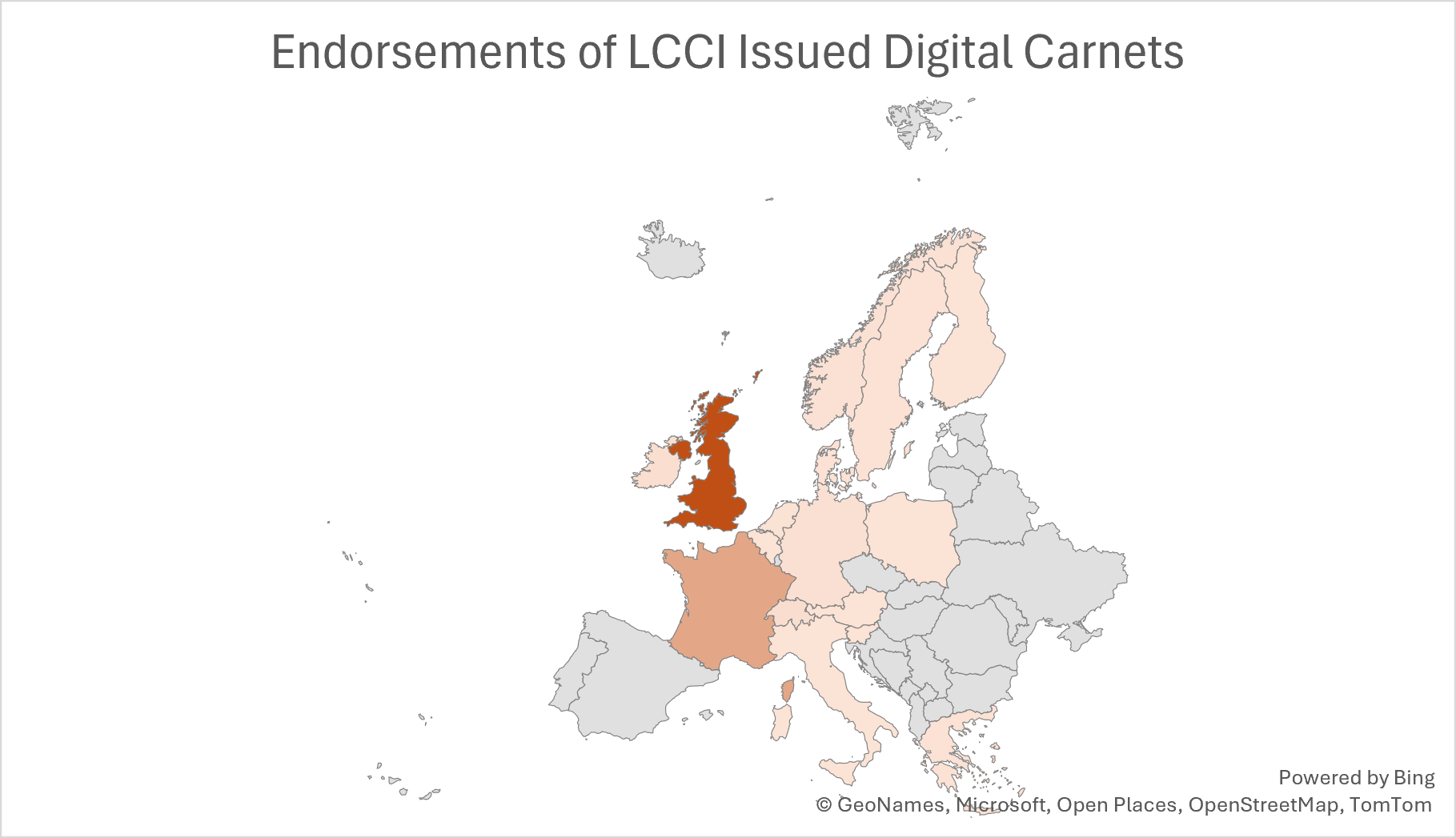
- Successful digital endorsements were recorded across the EU, Norway and Switzerland, covering 12 countries
- UK port processing capability increased to 12 locations
- French Customs confirmed that only digital carnets would be endorsed when all destinations were digital destination and that they no longer wished to process the paper back up
- UKNATACO began monitoring and reporting failed digital transactions internationally to support the change to digital
This phase demonstrated growing confidence across customs authorities and highlighted the importance of coordinated international reporting to resolve early issues.
Week 3: Scaling adoption and measuring impact
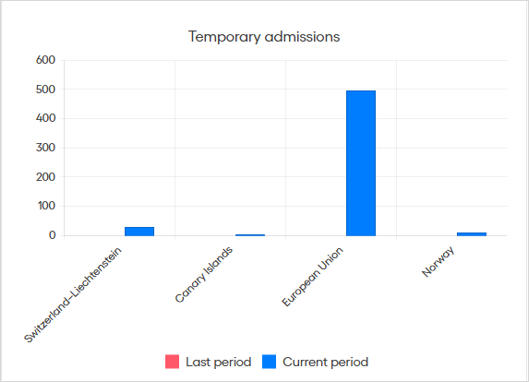
By week three, clear trends in adoption and usage were emerging. Around 70% of LCCI-issued ATA Carnets are expected to involve travel to the EU, Norway or Switzerland.
- 58% of LCCI issued carnets are now being digitally “activated” by Customs
- Nearly 2,000 digital transactions have been successfully processed across 19 countries
- Confirmed the compliant Replacement Carnet liability transfer procedure via the NCU and successfully had the first Replacement Carnets endorsed here
These figures and commitment to compliance in procedures show steady uptake and improving system reliability. Activation rates indicate that customs authorities are increasingly engaging with digital processes in real-world scenarios.
Ongoing support from LCCI
LCCI continues to provide end-to-end support throughout the carnet lifecycle, which can extend to 33 months. A dedicated team of ATA Carnet specialists is available to assist with:
- Issuance and digital setup
- Pre-travel preparation
- Border process guidance
- Post-travel and discharge procedures
The transition to digital carnets is progressing at pace but remains a dual processing environment in the short term. You should:
- Continue to follow LCCI guidance on when to carry paper backups
- Use the pre-travel checklist for every journey
- Engage with LCCI support team on [email protected] if travelling through multiple territories
The direction is clear. Digital carnets will become standard. Early adoption, supported by practical guidance, will help you avoid disruption and benefit from faster, more streamlined border processes.
Next step: Review your upcoming carnet travel plans and confirm whether your destinations support full digital processing. If unsure, contact the LCCI carnet team for guidance.
LCCI are optimistic that soon there will be no more paper trails, just smooth digital sails.
You May Also Like